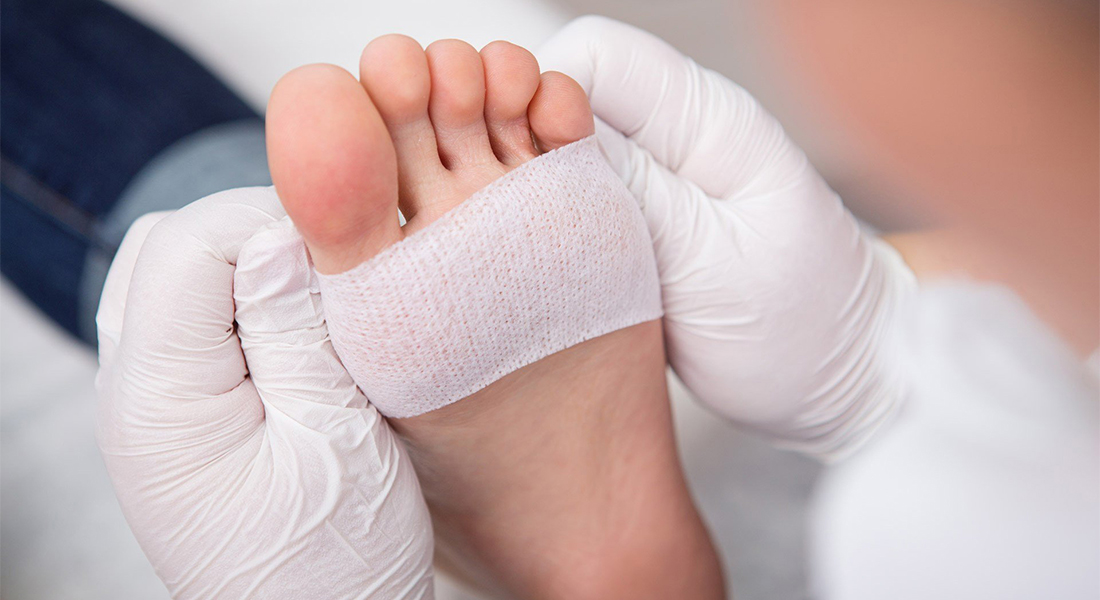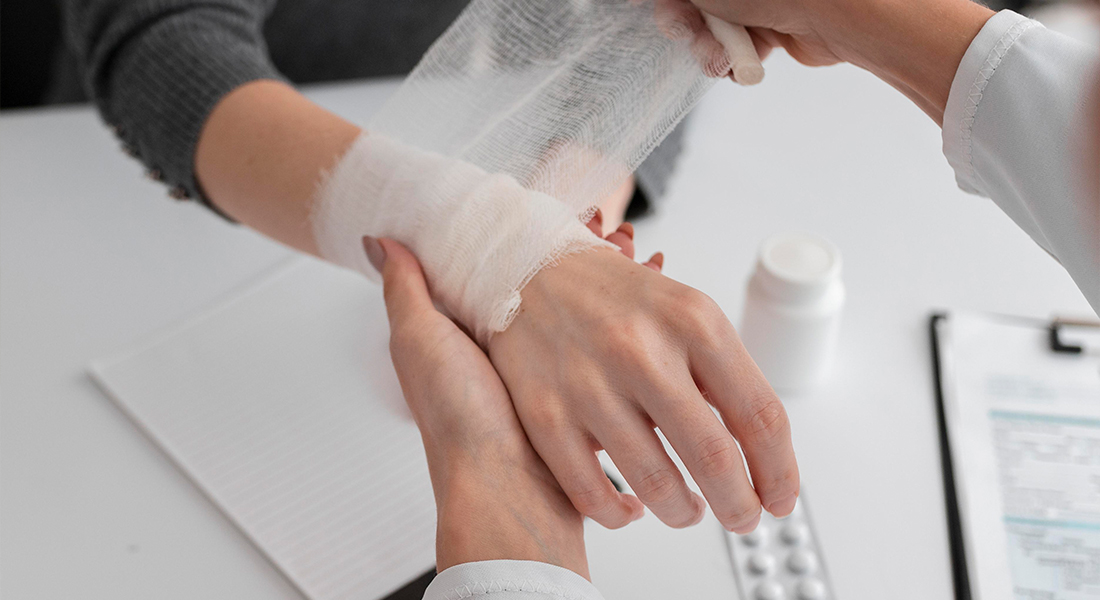
Amniotic membrane application involves placing specially processed placental membrane obtained after childbirth over a wound as a biological covering. While protecting the wound, the membrane may support healing through naturally occurring components within its structure. It can be considered as an adjunctive option for chronic and difficult-to-heal wounds.
What Is an Amniotic Membrane?
The amniotic membrane is the innermost layer of the sac that surrounds a baby in the womb. This tissue, which would normally be discarded after delivery, can be processed for medical use following voluntary donation and detailed donor screening.
The membrane is processed to remove cells while preserving its structural matrix. This is intended to reduce the likelihood of an immune response. Products may be stored frozen or in dehydrated form.
Amniotic membrane has been used in ophthalmic surgery for many years. Its use in wound treatment has become more common more recently.
How Can It Contribute to Wound Healing?
- Covers and protects the wound surface from external factors
- Provides a tissue scaffold through naturally occurring collagen and structural proteins
- May support cell proliferation through growth factors within the tissue
- May help regulate the inflammatory response
- Helps maintain a moist wound environment
- May help reduce pain
- May contribute to limiting scar formation
Which Wounds Can It Be Used For?
- Diabetic foot ulcers that do not respond to standard treatment
- Long-standing venous ulcers
- Pressure ulcers
- Superficial and partial-thickness burn wounds
- Postoperative wounds with delayed healing
- Covering skin-graft donor sites
- Traumatic wounds with tissue loss
The application complements basic wound treatment. Expected benefit is unlikely if poor circulation or infection has not first been addressed.
How Is It Applied?
The wound is evaluated before treatment and cleaned with debridement when necessary. The wound bed should be viable and free of uncontrolled infection.
The prepared membrane is cut to fit the wound and placed over the wound surface. It is then covered with a non-adherent dressing and secured if necessary. The procedure can generally be performed on an outpatient basis.
The membrane gradually integrates with the wound bed. Application frequency depends on the wound and may be repeated at intervals in some cases.
When Is It Not Appropriate?
- Active, uncontrolled wound infection
- Extensive dead tissue in the wound bed
- Unassessed or uncorrected circulatory impairment
- Active cancer at the application site
- Known hypersensitivity to product components
Safety and Regulatory Framework
Amniotic membrane products are regulated as human-derived tissue and cellular products. Donor screening, tissue processing and storage are subject to defined rules. Before treatment, patients should be informed about the source and regulatory status of the product.
After the Application
- Follow dressing-change intervals as instructed
- Protect the treated area from pressure and trauma
- Keep the area dry for the recommended period
- Continue blood glucose monitoring
- Maintain adequate protein intake
- Do not smoke
- Seek medical attention for increasing pain, redness, fever or drainage
Specialist Evaluation for Amniotic Membrane Treatment
For this method to contribute meaningfully, the wound bed must first be prepared appropriately. Prof. Dr. Emre Özker evaluates circulation, infection and tissue viability together when considering amniotic membrane application and uses the method as part of a comprehensive wound-care plan. Results vary from patient to patient.
Product Forms
Amniotic membrane products can be prepared in different forms, and selection depends on wound characteristics.
- Cryopreserved forms: Thought to preserve tissue structure more effectively but require special storage conditions
- Dehydrated forms: Can be stored at room temperature and are practical to use
- Single-layer products: Often preferred for superficial wounds
- Multilayer products: Provide a more durable covering for deeper wounds
- Particulate forms: May be used in irregular or cavity wounds
Product form directly influences ease of application and dressing-change frequency.
From Ophthalmic Surgery to Wound Treatment
Amniotic membrane has long been used for disorders of the ocular surface. Experience in that field helped clarify its potential anti-inflammatory and surface-repair-supporting properties.
Its use in wound treatment draws on this experience, but the ocular surface and a chronic leg wound are very different environments. Chronic wounds may involve poor circulation, bacterial burden and ongoing pressure. Successful outcomes in ophthalmology therefore cannot simply be assumed to apply directly to chronic wounds.
Preparation Before Application
- The wound bed should be cleaned with debridement
- Infection should be controlled
- Circulation should be assessed and corrected when necessary
- Pressure on the wound should be relieved
- Blood glucose and nutritional status should be optimized
- The patient should be informed about the source and regulatory status of the product
Without this preparation, integration of the product with the wound bed becomes more difficult.
Comparison with Other Tissue Equivalents
Unlike animal-derived tissue equivalents, amniotic membrane is human-derived. This may provide an alternative for patients who prefer not to use animal-derived products.
Compared with thicker tissue substitutes, amniotic membrane is a thinner covering. It may therefore be insufficient on its own for large and deep tissue defects, where thicker scaffolds or skin grafting may be more appropriate.
Its thin structure, however, makes it convenient for superficial and moderately deep wounds.
Follow-Up
After application, the wound is evaluated at defined intervals. Integration of the membrane, a healthier pink wound bed and decreasing drainage are considered positive signs.
Residual membrane seen during the first dressing change can be expected and should not be forcibly removed. If measurable improvement does not occur after a defined number of applications, circulation, infection, pressure and nutrition should be reassessed.
Application Frequency and Duration
The number of applications depends on wound size, depth and response. A single application may be sufficient for a small superficial wound, whereas larger wounds may require repeated treatment.
Applications are often planned at intervals of one to two weeks. The wound is reassessed before each treatment and debridement is repeated if dead tissue has accumulated. If no measurable improvement occurs after an appropriate number of applications, the treatment plan should be reviewed.
Cost and Availability
Amniotic membrane products can be costly because they require tissue-banking processes, and access may be limited. Storage requirements also depend on the capabilities of the treatment center.
Expected benefit, planned number of applications and total cost should be considered together. If basic wound care is incomplete, completing those essential steps should always take priority.
Priority of Standard Treatment
Advanced biological products do not replace basic wound management. Removal of dead tissue, correction of poor circulation, infection control, pressure relief, blood glucose management and nutritional support remain the priorities.
Once these steps have been completed, biological coverings such as amniotic membrane may be considered when a wound still fails to respond adequately.
Frequently Asked Questions
Where does the amniotic membrane come from?
It can be obtained after planned cesarean delivery following voluntary donation and detailed health screening. The tissue then undergoes defined processing and storage procedures.
Will my body reject the tissue?
Because the membrane is processed to remove cells, the likelihood of an immune response is low. However, as with any biological product, the possibility of a reaction cannot be excluded completely.
Is the application painful?
Placing the membrane is generally painless. Discomfort may occur during debridement performed beforehand, for which anesthesia can be used when needed.
How many times is it applied?
The number of applications depends on wound size and response. One application may be enough for some wounds, while others require repeated treatment.
Can it be used for every wound?
No. It is not appropriate for wounds with active infection, extensive dead tissue or unassessed circulatory impairment. These problems should be addressed first.
Can I change the dressing myself afterward?
The first dressing change is generally performed by healthcare personnel. Instructions for later changes depend on the condition of the wound.
What happens if the membrane does not integrate?
Possible causes such as infection, movement, fluid accumulation or poor circulation are investigated. After the underlying issue is addressed, another application may be considered.
Is this treatment religiously acceptable?
The product is obtained through voluntary donation. Patients with ethical or religious concerns should discuss them with their physician and consider alternative options before treatment.
Will I have pain after the application?
Placement itself is generally painless. Some patients report less wound pain afterward. A significant increase in pain should be evaluated.
How long does the product remain on the wound?
The membrane gradually integrates with the wound bed and is absorbed. The time varies by product and wound condition, and residual material at dressing changes may be expected.
Can more than one method be used in the same patient?
Yes. Amniotic membrane may be combined with methods such as negative pressure wound therapy or compression therapy when appropriate. The plan depends on the wound.
Which wounds are most likely to be considered for amniotic membrane?
It is most often considered for superficial or moderately deep wounds that have a clean wound bed and adequate circulation but are closing more slowly than expected. In very deep or extensive tissue loss, thicker scaffolds or grafting may be more appropriate.