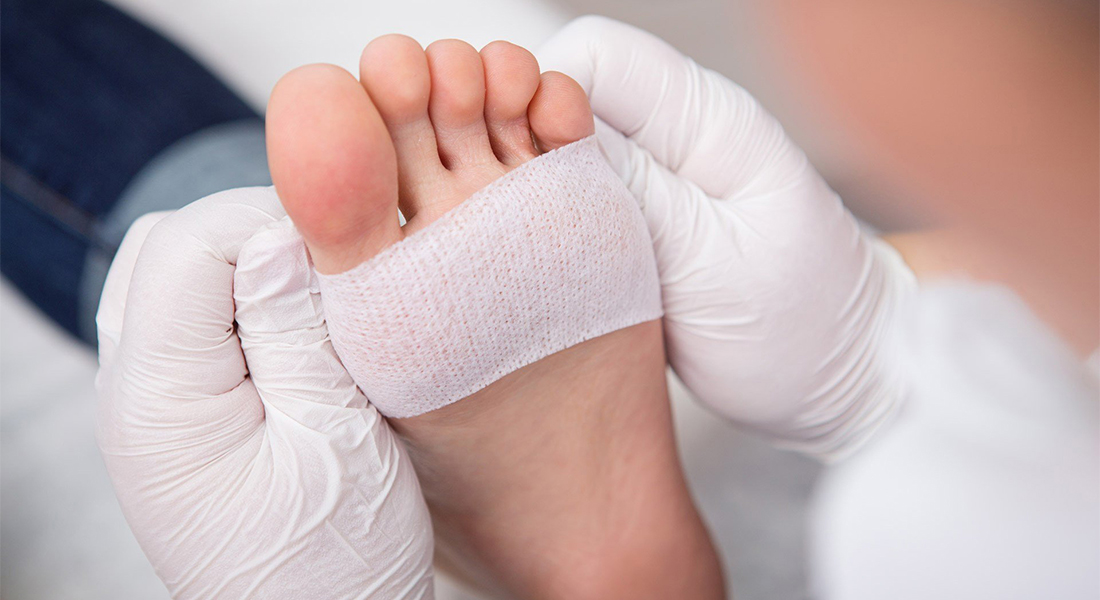
Collagen wound dressings and hyaluronic-acid-containing products are dressing materials that provide components used in tissue repair directly to the wound bed. Collagen supports the tissue scaffold, while hyaluronic acid helps maintain a moist wound environment and supports cell movement. They are often considered together in chronic wound care.
What Are Collagen and Hyaluronic Acid?
Collagen is the most abundant structural protein in the body. It provides strength to skin, tendons and connective tissue. During wound healing, new tissue is formed on a framework of collagen fibers.
Hyaluronic acid is a molecule with a very high water-binding capacity that fills the spaces between tissues. It creates a moist environment in which cells can move and plays an important role in the early stages of tissue repair.
Both components can be adversely affected in chronic wounds. Enzymes produced in the inflammatory environment break down collagen, the tissue framework deteriorates and the foundation needed for new tissue formation is weakened.
How Do These Products Work?
- Provide a scaffold for tissue repair in the wound bed
- May bind some collagen-degrading enzymes and help restore balance
- Maintain a moist wound environment
- Facilitate movement of cells across the wound surface
- Support new blood vessel formation
- Help balance wound drainage
- May reduce discomfort during dressing changes
Product Forms
- Collagen sheets and sponges: Used for superficial and moderately deep wounds
- Collagen powders and granules: Preferred for irregular or cavity wounds
- Collagen gels: Provide moisture in dry wounds
- Hyaluronic-acid dressings and gels: Support moisture balance and cell migration
- Combination products: May contain collagen with hyaluronic acid or antimicrobial components such as silver
Product selection depends on wound depth, amount of drainage, infection status and the characteristics of the wound bed.
Which Wounds Can They Be Used For?
- Diabetic foot ulcers
- Venous ulcers
- Pressure ulcers
- Postoperative wounds with delayed healing
- Partial-thickness burn wounds
- Wounds with inadequate granulation tissue development
- Care of skin-graft donor sites
When Are They Not Appropriate?
- Wounds covered with dry, hard necrotic tissue
- Active, uncontrolled infection
- Known hypersensitivity to the source material
- Severe circulatory impairment that has not yet been evaluated
Many collagen products are derived from bovine, porcine, fish or avian sources. The source should therefore be disclosed to the patient in advance and patient preference should be respected.
How Are They Applied?
The wound is first cleansed with an appropriate solution and debrided when necessary. The product is cut to fit the wound or, when supplied as a powder, placed directly into the wound bed. A secondary dressing suitable for the amount of drainage is then applied.
Collagen products are gradually absorbed by the wound bed. Gel-like residue seen during dressing changes is therefore expected and should not be forcibly removed. Dressing-change frequency depends on the product and the amount of exudate.
Setting Realistic Expectations
Collagen and hyaluronic-acid products are supportive dressings intended to improve the wound environment. They do not correct poor circulation, treat infection or relieve pressure on the wound. They are most useful when combined with appropriate basic wound care. Response varies between patients.
Specialist Evaluation for Collagen and Hyaluronic Acid Products
Dressing selection is a dynamic decision that changes according to the wound’s condition at each visit. Prof. Dr. Emre Özker regularly reassesses moisture balance, drainage and infection when using collagen- or hyaluronic-acid-containing products and also considers patient preferences when selecting a product.
Collagen Balance in Chronic Wounds
In a healthy wound, collagen production and breakdown remain balanced. In chronic wounds, the balance shifts toward excessive breakdown. Enzymes produced in the inflammatory environment increase and newly formed collagen fibers may be degraded faster than they can be rebuilt.
This is another area in which collagen dressings may contribute. Added collagen can bind some of these enzymes and help protect the wound’s own collagen. For this reason, gradual absorption and reduction of the applied material can be an expected part of treatment.
How Is Hyaluronic Acid Different?
Hyaluronic acid serves a different role from collagen. Rather than primarily providing structural support, it creates a moist, lubricated environment in which cells can move.
During the early stages of wound healing, this environment facilitates cell migration across the wound surface. Its strong water-binding capacity also helps prevent the wound bed from drying out. This may be particularly valuable in wounds that remain dry and show little epithelial advancement from the edges.
When collagen and hyaluronic acid are used together, one provides a scaffold while the other helps create a supportive environment.
Choosing a Product According to Wound Type
- Heavily exudative wounds: Collagen sponges with high absorbency or products combined with alginate
- Dry wounds: Hyaluronic-acid-containing gels
- Irregular or cavity wounds: Collagen powders or granules
- Wounds with high bacterial burden: Combination products containing antimicrobial components such as silver
- Superficial clean wounds: Thin collagen sheets
- Skin-graft donor sites: Non-adherent dressings that maintain a moist environment
Use with Secondary Dressings
Collagen and hyaluronic-acid products are usually used as primary dressings, meaning they are placed directly on the wound. A secondary dressing selected according to the amount of drainage is then applied over them.
Secondary-dressing selection is just as important as the primary product. A dressing with inadequate absorbency can allow exudate to spread onto surrounding skin and cause irritation, while an excessively absorbent dressing may dry the wound bed too much.
Important Points During Use
- Clean the wound gently with an appropriate solution and avoid aggressive scrubbing
- Apply the product to fit the wound without extending onto healthy skin
- Do not forcibly remove gel-like residue during dressing changes
- Protect surrounding skin with barrier products
- Follow the recommended change interval; changing dressings too frequently may delay healing
- If signs of infection develop, obtain an assessment before continuing treatment
Follow-Up and When to Stop
Effectiveness is monitored with regular wound measurements. Reduction in wound area, a healthier pink wound bed and epithelial advancement from the edges are positive indicators. As the wound begins to close with new epithelium, the need for these specialized products decreases and simpler dressings may be used.
If the expected change is not seen after an appropriate period, circulation, infection, pressure and nutrition should be reassessed before simply switching products.
Common Mistakes
- Applying collagen directly to a wound covered with dry necrotic tissue
- Changing the dressing too frequently and removing the product before it can act
- Mistaking expected gel-like residue for infection and forcibly cleaning it away
- Failing to match the secondary dressing to the amount of exudate
- Allowing the product to extend onto healthy skin
- Continuing treatment despite signs of infection
- Failing to protect the surrounding skin
Avoiding these mistakes can significantly influence the result obtained from the same product.
Cost and Product Selection
Collagen and hyaluronic-acid products are more expensive than conventional dressing materials. They are therefore better reserved for selected situations rather than used routinely for every wound.
Their contribution may be more noticeable in wounds in which healing has stalled and granulation tissue development is inadequate. Standard dressing materials are often sufficient for newly developed wounds that are healing normally.
Frequently Asked Questions
What are collagen products made from?
They may be derived from bovine, porcine, fish or avian sources. Source information is provided on the product and should be shared with you before use.
Should I clean away residue left in the dressing?
No. Collagen is absorbed by the wound and gel-like residue may be expected. Forcibly removing it can damage the wound bed.
Can hyaluronic acid reduce scarring?
A balanced moist environment may improve the quality of healing and scar appearance, but scarring cannot be prevented completely.
Do these products treat infection?
No. Infection requires appropriate treatment first. Some combination products contain antimicrobial ingredients, but they do not replace treatment of an established infection.
How often are the dressings changed?
Frequency depends on the product and amount of drainage. The interval is planned by the healthcare team and may change as the wound changes.
Are these products the same as oral collagen supplements?
No. Collagen dressings applied directly to a wound are different from oral supplements. Their intended effect in wound care comes from direct application to the wound bed.
How long should I use them?
Duration depends on the wound’s response. As epithelial closure begins, simpler dressings may become appropriate.
Do collagen products increase infection risk?
When used for the correct indication and under appropriate conditions, they are not expected to increase risk. They should not, however, be applied to an actively infected wound without first addressing the infection.
Are hyaluronic-acid products suitable for every wound?
No. Used alone, they may be insufficient for heavily exudative wounds and may need to be combined with a more absorbent dressing. Selection depends on wound moisture.
At what stage are these products most useful?
Their contribution is often most apparent when the wound bed has been cleaned but granulation tissue development has stalled. Standard dressings are usually adequate for newly developed wounds progressing normally, so advanced products should be reserved for selected cases.